What Kenya’s new 10% crypto fee means for you

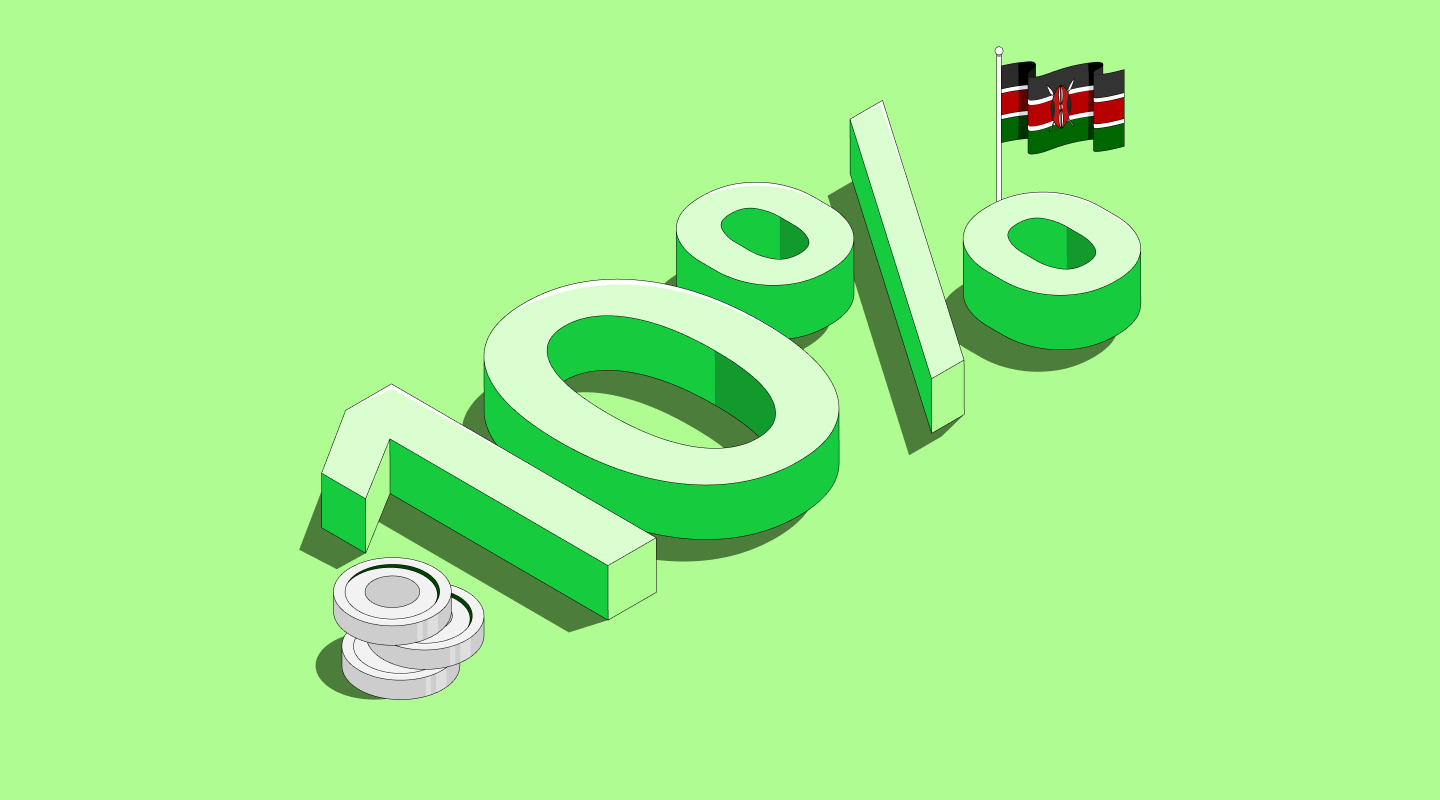
Kenya has updated its tax rules for digital assets. The main thing you need to know is simple:The new 10% fee is an Excise Duty charged only on the service fees you pay to exchanges and other Virtual Asset Service Providers. It is not a tax on your profit.
Your profits from selling crypto still fall under the existing 15% Capital Gains Tax, which you only pay when you actually make a gain.
Kenya also removed the old 3% Digital Asset Tax. That old tax was heavy because it was charged on your entire transaction amount, not just the fee. For example:
- On a KSh 1 million trade with a KSh 1,000 fee
- The old system would have taken KSh 30,000
- The new system takes KSh 100
This instantly makes crypto activity cheaper and more user-friendly.
Why this change matters
The 10% fee is meant to make the market more organised and predictable. It lowers trading costs, gives exchanges room to grow, and makes it easier for everyday users to understand what they are paying for.
How the new 10% fee works
The 10% excise duty applies only to the fee your exchange or wallet provider charges. It never touches the main value of your trade.So if a platform charges a KSh 1,000 fee, your tax is KSh 100.
Licensed platforms in Kenya are required to collect and send this tax to the Kenya Revenue Authority. If they fail to do so, penalties and interest may apply.
There are still some unclear areas, especially around what counts as a virtual asset and how decentralised platforms (which cannot collect taxes) will fit into the system. But for most users on centralised exchanges, the process is straightforward.
Your primary tax responsibilities: Capital gains tax and income tax
The 10% fee is small compared to your real tax responsibility — your profit.
Capital gains tax (15%)
Crypto is treated as property in Kenya. When you sell or swap it for a profit, you pay 15% capital gains tax on your net gain.To calculate this, you subtract your adjusted cost from your selling price. Your adjusted cost includes what you paid and any additional costs associated with acquiring the asset. Clean records are essential.
Income tax for activities that generate revenue
If you earn crypto from things like mining, staking, airdrops, or getting paid for work, that counts as income. This is taxed at regular income tax rates, up to 30% depending on your bracket.
Rules on losses
If you lose money trading, you cannot use that loss to offset income from other crypto activities, such as staking. You can only use trading losses to reduce future trading gains.
 Busha
Busha
How Kenya compares to others in Africa
Kenya’s approach becomes clearer when compared with South Africa and Nigeria.
- South Africa
- Taxes crypto as an intangible asset or trading stock
- R40,000 yearly exclusion
- Effective CGT can reach 18%
- Income from staking or mining may be taxed up to 45%
- Nigeria
- Flat 10% CGT on profits
- Income tax rates of 7–24% on revenue activities
Kenya’s advantage is lower trading friction and more predictable rules, which can help attract more activity and liquidity.
What you should do as a crypto user
- Use licensed platforms like Busha so your fees and taxes are handled correctly.
- Keep clear records so your 15% Capital Gains Tax is easy to calculate
- Separate your income streams if you earn from different crypto activities
- Remember that the 10% fee on platform charges does not replace Capital Gains Tax or income tax
Final thoughts
Kenya’s new system makes crypto activity cheaper and more organised. You benefit from lower transaction costs, more explicit rules, and a friendlier environment for trading and saving. Your main responsibility remains simple: pay Capital Gains Tax on profits and declare income from revenue-generating crypto activities.
 Busha
Busha
 Busha
Busha